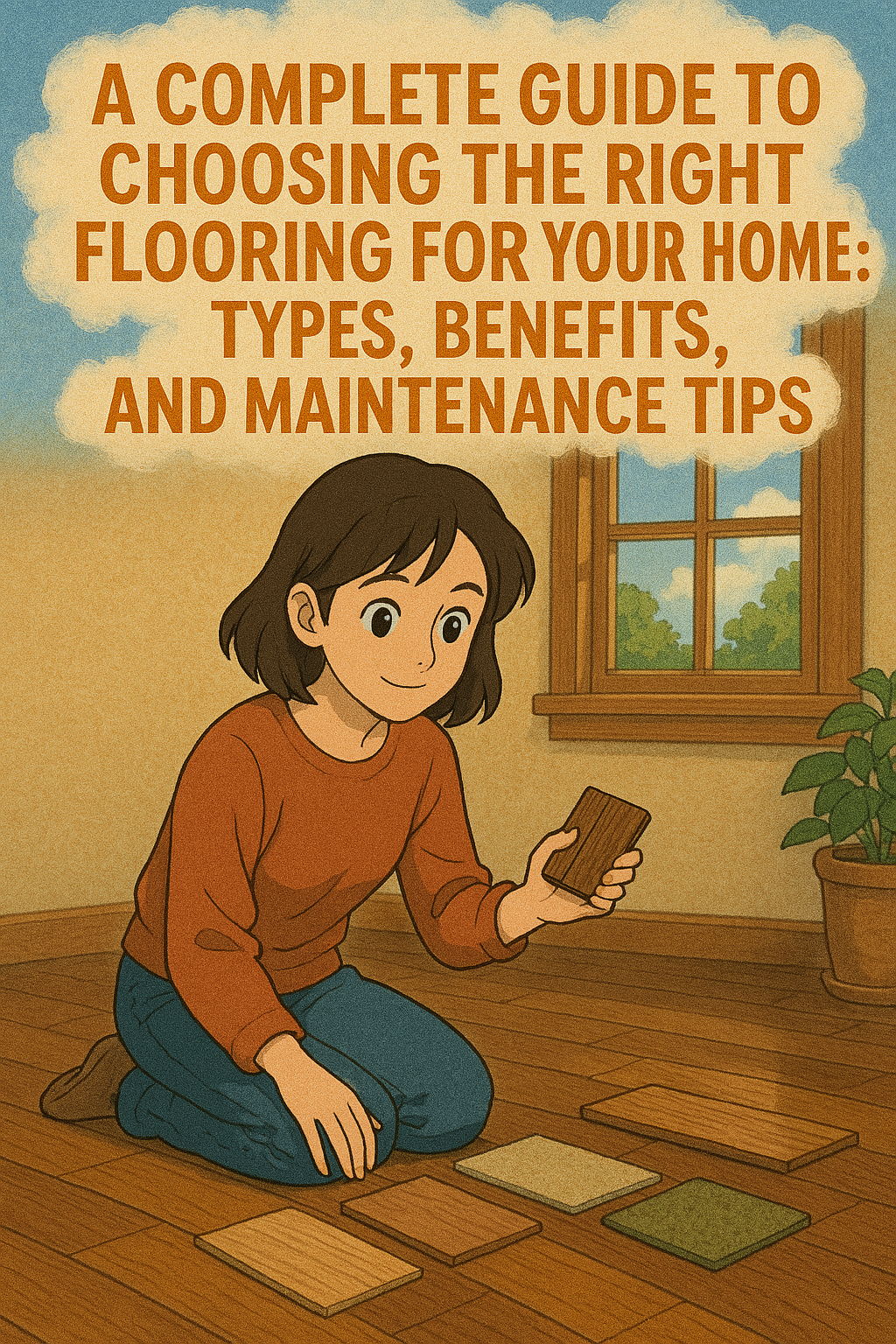
Flooring is a crucial element in home interior design that not only affects the aesthetics of a space but also its comfort and functionality. Choosing the right flooring for your home can have a long-term impact on your lifestyle, maintenance needs, and property value.
With so many flooring options available on the market—from ceramic tiles and wooden parquet to vinyl and granite—many homeowners may find it difficult to determine which one best suits their needs and home design. This article provides a comprehensive guide to the types of home flooring, their advantages, and practical maintenance tips to keep your floors durable and beautiful.

1. What Is Home Flooring?
Home flooring refers to the various materials used as a floor covering in residential spaces. Flooring serves not only as a walking surface but also as a decorative element that supports the interior design concept of a room.
Key aspects to consider when choosing flooring include:
- Durability against weight and scratches
- Ease of maintenance
- Compatibility with the local climate
- Visual appeal and surface texture
- Cost and installation process
2. Types of Flooring and Their Advantages
a. Ceramic Tiles
Ceramic is the most commonly used and affordable flooring option.
Advantages:
- Durable and strong
- Water-resistant and easy to clean
- Available in a wide range of patterns and sizes
- Suitable for almost every room
Disadvantages:
Can feel cold and slippery, especially when wet.
b. Granite and Marble
These are natural stone materials that offer a luxurious and elegant look.
Advantages:
- Scratch- and heat-resistant
- Adds a high-end aesthetic to interiors
- Very long lifespan
Disadvantages:
Relatively expensive and requires professional installation.
c. Vinyl Flooring
Vinyl is a synthetic flooring made of PVC, often designed to mimic wood or stone textures.
Advantages:
- Water- and moisture-resistant
- Soft and comfortable underfoot
- Quick and easy to install
Disadvantages:
Not ideal for high-heat exposure or harsh chemicals.
d. Wood Flooring (Parquet or Laminate)
Wood floors bring a natural and warm touch to any home.
Advantages:
- Visually appealing and premium
- Adds warmth to rooms
- Ideal for bedrooms and living rooms
Disadvantages:
Prone to scratches and sensitive to high humidity.
e. Epoxy Flooring
Epoxy is a resin-based floor coating, often used in garages, industrial kitchens, or minimalist-style homes.
Advantages:
- Withstands heavy loads and chemicals
- Seamless and non-absorbent surface
- Suitable for high-traffic or working areas
Disadvantages:
Less cozy in appearance, often looks more industrial.
f. Carpet Tiles
A flexible alternative commonly used in bedrooms and family rooms.
Advantages:
- Comfortable and warm underfoot
- Easy to replace individual tiles
- Adds a cozy and homey feel
Disadvantages:
Requires regular vacuuming to avoid dust and allergens.
3. How to Choose the Right Flooring for Your Home
Several factors should be considered before selecting your home flooring:
a. Room Function
Different rooms require different flooring needs:
- Kitchens and bathrooms need anti-slip, water-resistant materials like ceramic or vinyl.
- Bedrooms benefit from warm materials like carpet or wood.
- Living rooms are more flexible depending on design preference.
b. Interior Design Style
Define your home’s interior design style—whether minimalist, industrial, classic, or Scandinavian. Choose flooring that complements that theme.
c. Climate Conditions
In humid climates like Indonesia, solid wood flooring must be properly treated or avoided to prevent warping.
d. Budget
Flooring prices range from affordable to premium. Factor in both material and installation costs.
e. Long-Term Maintenance
Some flooring types like marble and wood require special care. Choose what fits your lifestyle and time availability.
4. Tips to Maintain Your Flooring for Longevity
a. Clean Regularly
Use appropriate cleaning tools for each type—mop for vinyl, soft broom for wood.
b. Avoid Harsh Chemicals
Especially on wood or natural stone, use specialized cleaners to prevent damage.
c. Use Rugs and Mats
In high-traffic areas, use rugs to protect the surface from wear and scratches.
d. Wipe Spills Immediately
Don’t let liquids sit too long, particularly on wood and marble surfaces.
e. Periodic Maintenance
Stone and wood flooring may need polishing or refinishing to maintain shine.
Conclusion
Choosing the right flooring for your home not only enhances your home’s appearance but also boosts comfort and long-term usability. By understanding the different flooring types, their pros and cons, and how to care for them, you can make an informed decision that fits your budget, lifestyle, and design goals.
Proper care ensures your flooring remains in excellent condition for years to come. Whether you prioritize luxury, durability, or affordability, there is always a flooring option that meets your needs.
We hope this guide helps you find the best flooring solution for your dream home!

someone with a deep passion for home remodeling and design, with over 6 years of experience in the field. Their main focus covers home renovation projects, exterior design, outdoor rooms, and various outdoor structures. Through in-depth research into the latest trends in design and construction, the author is committed to providing practical and easy-to-understand guidance for anyone looking to beautify and improve the quality of their home, both inside and out.